
Venezuela—Indictments, Invasions, and the Constitution’s Crumbling Guardrails
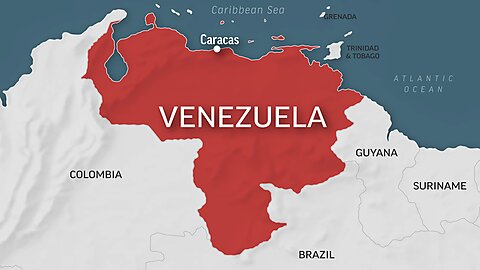
Last night, US forces attacked various locations in Venezuela in an operation to capture the loathsome President Nicolás Maduro and bring him to New York to face federal weapons and drug-trafficking charges for which he and other Venezuelan officials were indicted in 2020. Much ink has already been spilled regarding the legality of that operation and whether it transgresses the allocation of power over foreign affairs between the legislative and executive branches.
The short answer is that while the operation, which appears to have been more about regime change than law enforcement, raises profound constitutional concerns, the courts will almost certainly bless the ensuing prosecution and leave to Congress the decision whether to punish the president for overstepping his authority or claw back its war-making and foreign-policy responsibilities from an increasingly ambitious executive.
I. Noriega and the Judicial Template
In 1988, a federal grand jury in the Southern District of New York indicted Manuel Noriega on racketeering and drug trafficking charges, alleging that he had used his position as Panama’s de facto ruler to facilitate large-scale narcotics smuggling into the United States. In December 1989, the United States launched Operation Just Cause, invaded Panama, captured Noriega, and brought him to the United States to stand trial.
Noriega challenged virtually every aspect of that process. He argued that his seizure violated international law, that the invasion of Panama was unlawful, that he enjoyed head-of-state immunity, and that due process forbade his prosecution following a forcible extraterritorial capture. He lost on all counts. Federal courts held that the manner in which a defendant is brought before a US court—even by force, even from foreign soil—does not defeat criminal jurisdiction. They deferred to the executive branch’s determination that Noriega was not entitled to immunity and declined to treat alleged violations of international law as creating individual defenses in domestic criminal proceedings.
Critically, courts refused to consider the legality of the invasion itself. Whatever constitutional or international law questions Operation Just Cause may have raised, judges treated them as separate from—and irrelevant to—the criminal prosecution. Once Noriega was in custody pursuant to a valid indictment, the courts’ work, in their view, was essentially done.
That approach has hardened over time such that the Noriega precedent is treated not as an aberration, but as settled law.
II. Why the Noriega Precedent Will Likely Control Here
From a judicial standpoint, the parallels between Noriega’s and Maduro’s positions are obvious and likely dispositive. Like Noriega, Maduro was indicted before his capture. The 2020 SDNY indictment alleges that Maduro participated in a long-running conspiracy to traffic narcotics into the United States and to use state power to protect and profit from that activity. As in Noriega’s case, the charged conduct is framed not as sovereign governance but as a private criminal enterprise facilitated by public office.
Courts will see a familiar sequence: indictment first, custody second, and jurisdiction third. That sequence triggers a body of doctrine that is markedly hostile to challenges based on how custody was obtained.
Maduro’s stronger claim to legitimacy as a recognized head of state is unlikely to alter that analysis. US courts have long treated questions of foreign recognition and immunity as matters for the political branches, not the judiciary. Even fully recognized heads of state are generally immune only for official acts, not for alleged participation in drug trafficking conspiracies. And where the executive branch has taken a hostile or ambiguous position toward a foreign leader’s legitimacy, courts tend to defer and will most likely do so here.
III. Why This Leaves the Constitutional Problem Unresolved
If Noriega’s prosecution controls as a matter of judicial precedent, should those concerned with constitutional structure still worry about the manner in which Maduro was deposed and rendered to the US for prosecution? Absolutely.
First, let us acknowledge that Nicolás Maduro is a vicious authoritarian thug whose criminal, corrupt, and brutally repressive socialist regime has devastated Venezuela, exported instability across the region, and repeatedly harmed US interests through narcotics trafficking, political violence, and systematic human rights abuses. There is little doubt that the people of Venezuela and of neighboring countries—and perhaps even the United States—will be better off as a result of his removal from power. None of those facts, however, bear on who the Constitution empowers to make decisions of war and peace on behalf of the American people.
The Constitution’s allocation of power over foreign affairs was designed precisely to prevent unilateral executive decisions like the one we saw play out last night in a series of aerial attacks and explosions from entangling the nation in unwise and avoidable conflict. Article I commits to Congress—not the president—the power to decide when the United States will initiate hostilities against foreign sovereigns. That commitment includes the power to declare war and the related authority to issue letters of marque and reprisal, which historically authorized limited uses of force by private actors. Both provisions reflect a judgment that decisions risking international conflict, retaliation, and escalation should not rest with a single executive actor. As today’s New York Times editorial correctly notes, “Congressional debates over military action play a crucial democratic role. They check military adventurism by forcing a president to justify his attack plans to the public and requiring members of Congress to tie their own credibility to those plans.”
When a president unilaterally deploys military force abroad to seize a foreign head of state, those constitutional safeguards—and their underlying wisdom—are bypassed. War powers, foreign relations, and criminal law enforcement collapse into a single executive decision. Congress is neither consulted nor asked to authorize the use of force. Often, it is not even notified until after the fact.
That structural concern is not remotely cured by the existence of a valid indictment. An indictment may (or may not) explain why a president wishes to act, but it cannot supply the constitutional authority to do so through military force without meaningful congressional engagement, let alone authorization. To allow prosecutorial charging decisions to serve as de facto war authorizations is to invert the Constitution’s design and subvert the democratic process itself.
Moreover, the precedent set by the Maduro and Noriega operations invites dangerous reciprocity. If the United States can unilaterally deploy military force to seize Venezuela’s president for alleged violations of US law, other nations will claim symmetrical authority. China could assert the right to abduct American officials for violating Chinese national security laws. Russia could seize dissidents granted US asylum for crimes against the Russian state. The norms being eroded here protect everyone, including Americans serving abroad, and their collapse would leave US officials far more vulnerable to precisely the sort of forcible—and perhaps even pretextual—renditions as the one we saw last night.
IV. Erosion by Precedent and Practice
This is not a new problem. Over decades, Congress’s role in foreign affairs decision-making has been steadily eroded by executive practice, congressional acquiescence, and judicial deference. The War Powers Resolution has proven largely symbolic. Authorizations for the Use of Military Force have been stretched far beyond their original contexts. Courts have repeatedly declined to police the boundary between “law enforcement” and “war.”
Noriega-style cases both reflect and reinforce that erosion. By treating the use of military force abroad as legally irrelevant to subsequent criminal prosecutions, courts insulate executive decisions from meaningful review. Each unchallenged episode becomes a precedent for the next, normalizing unilateral action through repetition rather than deliberation.
V. The Unresolved Danger
None of this is to deny that US courts will almost certainly uphold jurisdiction in Maduro’s case. They likely will. Noriega gives them ample cover to do so. And by all accounts, Maduro deserves to spend the rest of his life rotting in a federal Supermax prison cell. But the legal and moral outcomes should not be mistaken for constitutional vindication.
If indictments can justify unilateral military action abroad, then Congress’s war powers become contingent on executive discretion and prosecutorial labeling. That is not a system of separated powers, but rather one of executive supremacy tempered only by politics.
The Constitution’s limits on foreign affairs power do not vanish simply because courts decline to enforce them. They persist both as structural commitments and as warnings. The fact that impeachment and political accountability may be the only remaining checks on such actions is not a solution; it is an increasingly hazardous pathology that puts America at far greater risk than any single foreign despot could, even one as brutal and destructive as Nicolás Maduro.