Romina Boccia and Tyler Turman
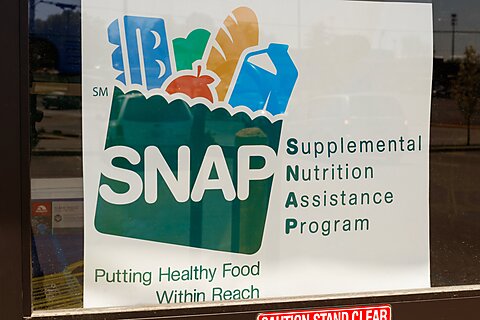
The federal government spent roughly $100 billion on the Supplemental Nutrition Assistance Program (SNAP) in fiscal year 2024, but at least $10.5 billion of that was lost to improper payments, according to the Government Accountability Office.
To improve integrity and reduce payment errors in SNAP, the One Big Beautiful Bill Act (OBBBA) requires states with improper payment rates above 6 percent to pay between 5 and 15 percent of SNAP’s benefits starting in FY 2028.
The ink on the bill is barely dry. Yet states are wasting no time exploiting a last-minute carveout to quickly undermine what the reform intended.
The “Alaska Carveout” Loophole
To address Senate concerns, Republicans included a provision—nicknamed the “Alaska carveout”—that delays the cost-sharing requirement for states with exceptionally high improper payment rates by two additional years. Specifically, states with error rates above 13.34 percent in FY 2025 won’t face cost-sharing requirements until FY 2029. Likewise, those exceeding the threshold in FY 2026 get an exemption until FY 2030. The delay can only be used once, based on either FY 2025 or 2026 data, but not both.
In total, ten SNAP jurisdictions would qualify for this temporary reprieve based on FY 2024 data: Alaska, the District of Columbia, Florida, Georgia, Maryland, Massachusetts, New Jersey, New Mexico, New York, and Oregon (Figure 1).
As Reason reporter Eric Boehm points out, this provision inadvertently rewards the worst-performing states while penalizing those that improve their oversight. For example, Senator Brian Schatz (D‑HI) highlighted this perverse incentive, noting that Hawaii reduced its error rate from 20.94 percent in 2023 to 6.68 percent in 2024, only to face penalties for doing so. Had Hawaii kept its error rate high, it could have avoided paying more than $30 million in potential cost-sharing requirements.
New Mexico offers another urgent example. The state reported a 14.61 percent error rate for payments in 2024 and had been making steady progress toward reducing it below 10 percent by 2026. But, as Patrick Lohmann reported for Source NM, officials have abruptly halted that effort, with the director of the state’s Income Support Division admitting to doing a “balancing act”—reducing New Mexico’s SNAP error rate, but not before the end of FY 2026. The immediate financial stakes explain why: dropping below 13.34 percent would trigger cost-sharing requirements. It’s now cheaper for the state to maintain high error rates.
Officials in other states have been even more brazen in their misconduct. As Brooke Conrad reported for Fox Baltimore, a whistleblower claimed that two senior officials in Maryland were planning to deliberately leave correctable errors uncorrected to keep the state’s payment error rate elevated so it could “get the state off the hook for $240 million in new federal penalties.” After disclosing this “unlawful and unethical conduct” to the Office of the Inspector General, the whistleblower was fired.
These loopholes have broader consequences: OBBBA’s requirements also risk penalizing states with transparent quality control processes while rewarding those who game the system by underreporting improper payments.
Most states already have a track record of doing this. In 2014, the USDA identified quality control issues in 42 out of 53 state SNAP agencies. States had weakened their QC procedures by hiring private third-party consultants to exploit the subjectivity in the review process to artificially lower their reported improper payment rates and avoid financial sanctions.
Another tactic involves exploiting discretionary “no good cause” waivers, which allow states to exempt up to 8 percent of able-bodied adults from SNAP work requirements for any reason. As the Foundation for Government Accountability has highlighted, states can use these waivers retroactively to hide improper payments. From 2016 to 2020, roughly 100,000 discretionary waivers were issued retroactively across just five states.
How Congress Can Finish the Job
Looking at next steps, Congress had the right intentions in giving states some skin in the game to reduce improper payments in SNAP.
Nonetheless, with billions of dollars in penalties at stake, states have strong incentives to exploit loopholes rather than fix the underlying problems.
Congress must act immediately to build on OBBBA’s reforms and curb welfare fraud by eliminating the “Alaska carveout” and other loopholes that states exploit, such as “no good cause” waivers.
Requiring states to pick up part of the tab for SNAP benefits when they can’t keep improper payments in check is a reasonable step toward improving the program’s integrity. No state should be exempt from that arrangement.
Ultimately, however, the best way to fix SNAP’s moral hazard problems that underlie many of SNAP’s integrity failures is to eliminate federal funding for the program and leave nutrition assistance up to the states.
The best way to stop waste, fraud, and abuse in SNAP is to make states pay for it.